Lectins: What? Why? How?
- Nicci B

- Jul 21
- 5 min read
Lectins: What They Are, Why Your Gut Notices, and What the Science Actually Says
You may have heard lectins blamed for everything from bloating to autoimmune flare-ups.
Diet books have built entire food-avoidance empires around them, complete with supplements to "block" them, as though your dinner were plotting something.
So what's the truth?
As with most things in holistic care, the answer sits in the middle - and it's a lot more useful (and a lot less dramatic) than the headlines suggest.
What Lectins Actually Are
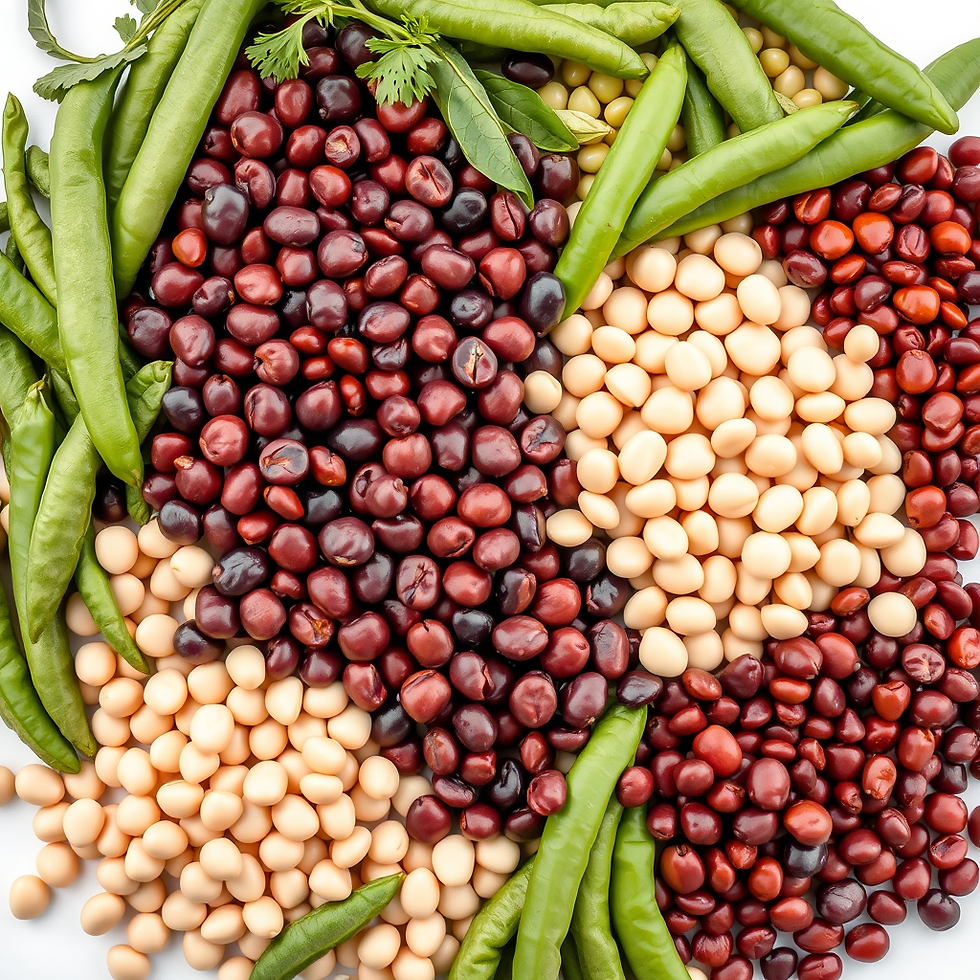
Lectins are proteins found throughout the plant kingdom - most concentrated in legumes (beans, lentils, chickpeas), whole grains, nightshades (tomatoes, potatoes, aubergine), and some nuts and seeds.
Their job, biologically, is defence: they bind to carbohydrates and help the plant deter pests and predators from eating it before it can reproduce.
The humble kidney bean, it turns out, has a very clear sense of boundaries.
That binding action is exactly why lectins matter for us. Some lectins bind to simple sugars and pass through us largely unnoticed - model houseguests, no fuss, no mess. Others - like phytohaemagglutinin (PHA), the lectin found in raw kidney beans - bind to complex carbohydrates in the lining of our gastrointestinal tract (GIT), and this is where things get, let's say, audible.
Undercooked kidney beans are one of the most classic causes of sudden, dramatic food poisoning - a handful of raw beans can have you reacquainted with your bathroom within an hour. Your gut does not find this funny at the time. We, from a safe distance, are amused.
What the Science Actually Shows
This is where nuance matters, because the online lectin-avoidance movement and the peer-reviewed research are telling rather different stories.
The genuine risk is real, but narrow. The European Food Safety Authority conducted a comprehensive review of plant lectins, completing an extensive literature search of animal and human studies through 2025.
Their conclusion: lectins that bind complex carbohydrates - bean lectins in particular - can cause gastrointestinal illness and allergic reactions, but the danger arises specifically from inadequately prepared food. Properly soaked and cooked, these same lectins are rendered biologically inactive.
Translation: it's not the bean that's the problem, it's the bean that never got properly cooked and decided to stage a full protest in your digestive tract.
Germany's Federal Institute for Risk Assessment reached a similar conclusion in 2024, flagging nausea, abdominal pain, and diarrhoea as the primary concerns - particularly in children - from raw or undercooked lectin-containing foods. Not exactly a dinner party highlight.
The "lectins cause chronic inflammation" claim is much weaker than popular diet books suggest. A 2024 review in the journal Heliyon examined the dual nature of dietary lectins - noting they're often cast as the villain of the plate, but that "the accuracy of these claims has been debated." Researchers found lectins can act as immunomodulators, with effects ranging from inflammatory to protective depending on the lectin, the dose, and the individual.
In other words: bloating after a big bowl of chilli might just mean you ate a big bowl of chilli, not that beans are quietly sabotaging your immune system. The review's own conclusion was that we simply don't have enough quality research yet to make sweeping claims either way.
Harvard's T.H. Chan School of Public Health puts it plainly: there is very limited human research on how much active lectin people actually consume in a normal diet, or its long-term effects. And crucially, large population studies consistently show that lectin-containing foods - legumes, whole grains, nuts - are associated with lower rates of cardiovascular disease and type 2 diabetes, along with healthier weight outcomes.
These foods bring fibre, B vitamins, protein, and minerals that far outweigh the anti-nutrient concern for most people eating a normal, varied, well-prepared diet.
So the honest picture: raw or undercooked high-lectin foods carry real, documented, occasionally comedic-in-hindsight risk.
Properly prepared high-lectin foods, for most people, appear to be net beneficial - not something to fear, and not something to blame every gurgle on.
How to Work With Lectins (Not Against Them)
You don't need to banish beans, grains, or nightshades from your kitchen. You need to prepare them properly, so your gut doesn't stage an uprising.
A few evidence-backed methods:
Soak, then boil in fresh water. For dried beans, an overnight soak followed by a full boil (not just a simmer) is the most reliable method — boiling at high, sustained heat is what deactivates lectins; slow-cooking on low alone isn't enough. This is not the moment for a gentle simmer and good intentions.
Discard the soaking water. Rinse beans after soaking and cook in fresh water rather than the liquid they soaked in. That water has absorbed enough drama for one bean's lifetime.
Pressure-cook when possible. High-pressure cooking is one of the most efficient ways to reduce lectin activity, and it's faster than a long soak-and-boil cycle — efficient, and considerably kinder to your evening plans.
Ferment where you can. Traditional fermentation — think tempeh, miso, sourdough, or fermented vegetables — breaks lectins down naturally while adding beneficial microbial diversity, no bathroom drama required.
Sprout grains, seeds, and legumes. Sprouting reduces lectin content and tends to improve digestibility and nutrient availability at the same time.
Peel and deseed where lectins concentrate. In nightshades like tomatoes, cucumbers, and courgettes, lectins sit more heavily in the skin and seeds — removing them lowers your intake without losing the vegetable itself.
Vary your sources. Rotating between different grains and legumes (barley, farro, millet, several bean varieties) means you're never over-relying on one lectin type — and never facing the same digestive plot twist twice in one week.
The Holistic Takeaway
This is a good example of where nutrition science and wellness marketing part ways. The research doesn't support blanket lectin avoidance for the general population - it supports thoughtful preparation.
That's a very different message from "cut out beans and tomatoes forever," and it's one that lets you keep the nutrient density of these foods while minimising the genuine, occasionally undignified risk.
If you have a diagnosed gut condition, autoimmune disorder, or a pattern of reacting to specific foods, that's a different, more personal conversation - and it's exactly the kind I have with clients one-to-one, because your gut doesn't read population studies, it reads you. Sequenced, individual care beats a blanket rule every time.
But for most people, the answer to "should I avoid lectins?" isn't avoidance. It's a proper soak, a proper boil, and a little less panic at dinner.
Sources: European Food Safety Authority (EFSA) scientific opinion on plant lectins in food (2025); German Federal Institute for Risk Assessment (BfR, 2024); "From inflammation to immune regulation: The dual nature of dietary lectins in health and disease," Heliyon (2024); Harvard T.H. Chan School of Public Health, The Nutrition Source.



Comments